Newsletter #105: Announcing ThawraProject.com
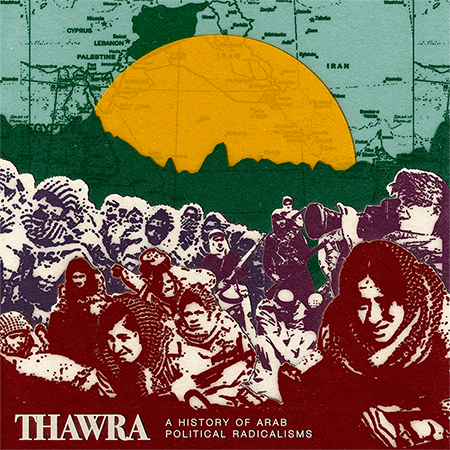
In February 2024, just 4 months into Israel’s genocide in Gaza, the Dig launched what became Thawra, our 19-part, 40+ hours long series on Arab radicalism in the 20th century, narrated by Abdel Razzaq Takriti. It was more ambitious than anything we had done before, and involved months of study and planning, taking up most of a year’s worth of programming on the Dig.
At long last, we have put together a digital study-guide and research tool for Thawra. It provides the scaffolding needed for either collective study, or a portolan for individual edification: further reading and viewing material, discussion questions, and more. In the coming weeks and months, we’ll be adding a bit more to the website, including more PDF versions of reading suggestions, and transcripts of each episode; we will also be publishing a written interview between Ben Mabie and Abed Takriti on the latter’s formation as a scholar and activist. Check it out and let us know what you think!
We have to give credit to Ben Mabie, Katy Montoya, and Nihal El Aasar for putting the study guide together, and to Sylvia Atwood for her operations work on the project. Caleb Stone designed a beautiful website. We also want to thank the comrades of Democracy DarKar who carefully translated and then rerecorded the entirely series into Farsi, which inspired our own work on completing this study guide too.
Across hours of finely detailed inquiry, Thawra charts the emergence and evolution of revolutionary currents in the Mashriq, including nationalism, Nasserism, Ba’athism, communism, and Islamism-set in the context of imperialist power politics and predation. Every episode emphasizes the critical history of the Nakba and the Palestinian national liberation struggle which have decisively shaped the region -and, obviously, continue to do so today. This pod is an ideal resource for academic courses, activist political education, and anyone interested in better understanding the making of the modern Middle East.
Why did we undertake such an effort, despite the fact that Thawra was, initially at least, not as successful at finding an audience as our one-off interventions into the start of Israel’s genocidal war? Because we felt that it was crucial that the anglophone left develop a stronger grasp of the turbulent political and social struggles which made and remade this critical part of the world. The struggles of the Arab left, and Arab mass politics more generally, provided a privileged vantage point from which to grasp the changing shape of imperialism and colonialism and the forms taken in the struggle against it.
We hope that this new resource encourages people to return back to the series, and revisit its insights in the months and years to come.